
Advanced ADAS systems require testing in real environments that go beyond the limitations of traditional test tracks. An Industrial Doctorate project between Applus+ IDIADA and the UPC develops a multimodal perception system to create the "field truth" necessary for certification.
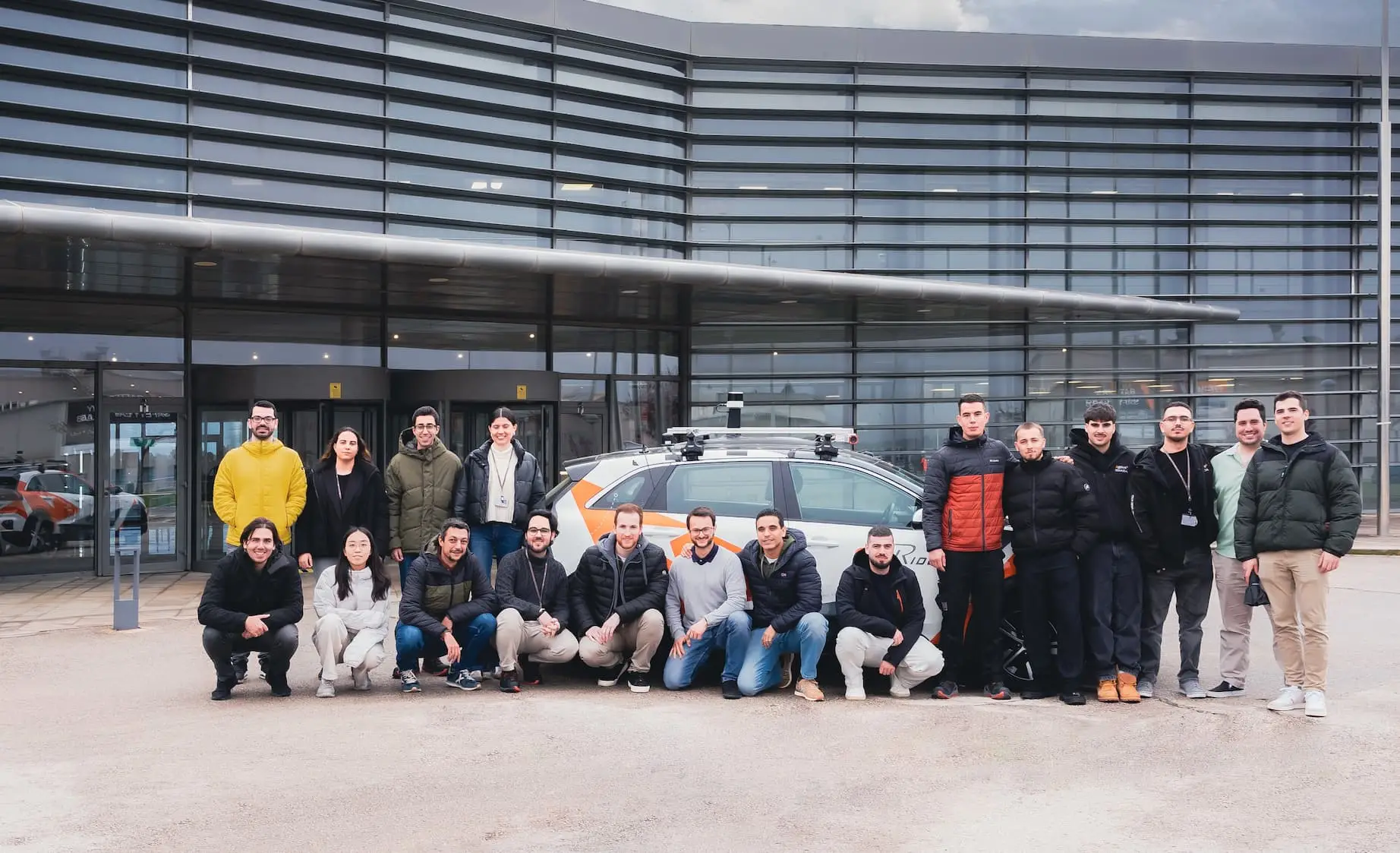
The future of mobility lies in autonomous vehicles and increasingly complex advanced driver assistance systems ( ADAS ). These ADAS systems (acronym for Advanced Driver-Assistance Systems) are technologies that automate driving tasks to increase safety and comfort. They function as an electronic “co-pilot” that, using sensors (cameras, radars, lidars), constantly monitors the vehicle's environment . Their functions range from basic assistance, such as adaptive cruise control or lane keeping, to critical interventions, such as automatic emergency braking.
As these functions take on more control, a critical challenge arises: how can we ensure that they are safe outside of controlled environments? To answer this question, industrial doctoral student Marc Perez Quintana, within the framework of a strategic collaboration between Applus+ IDIADA and the Institute of Robotics and Industrial Informatics (IRI) of the UPC, is developing a reference perception system capable of validating these technologies directly in real driving conditions.
This project is the evolution of the work initiated by IDIADA in 2018. “ Initially it was for an internal robotaxi project where we used cameras, radars and lidars to drive autonomously through the streets of IDIADA in very controlled situations ,” explains Fuentes. This previous experience highlighted the need for more robust perception systems for validation. This need coincides with the qualitative leap that the automotive industry is facing. ADAS systems no longer only warn; they now make decisions in fractions of a second. This complexity makes traditional tests in closed circuits insufficient . “ To ensure that the functions are safe, it is also necessary to carry out tests on the open road in normal driving conditions ,” explains Jesús Fuentes, project manager at Applus+ IDIADA. That is why the central problem lies in validation. To know if the system of the test vehicle acts correctly, it is necessary to compare it with an infallible “ ground truth ”. “ Then the challenge is how to estimate the position of all the surrounding vehicles, to evaluate whether the function behaves safely ,” adds Fuentes.
"This project will allow us to continue to be global benchmarks when it becomes more important to validate these systems on the open road."
Marc Perez Quintana, Industrial Doctoral Student (Applus+ IDIADA / UPC) Share
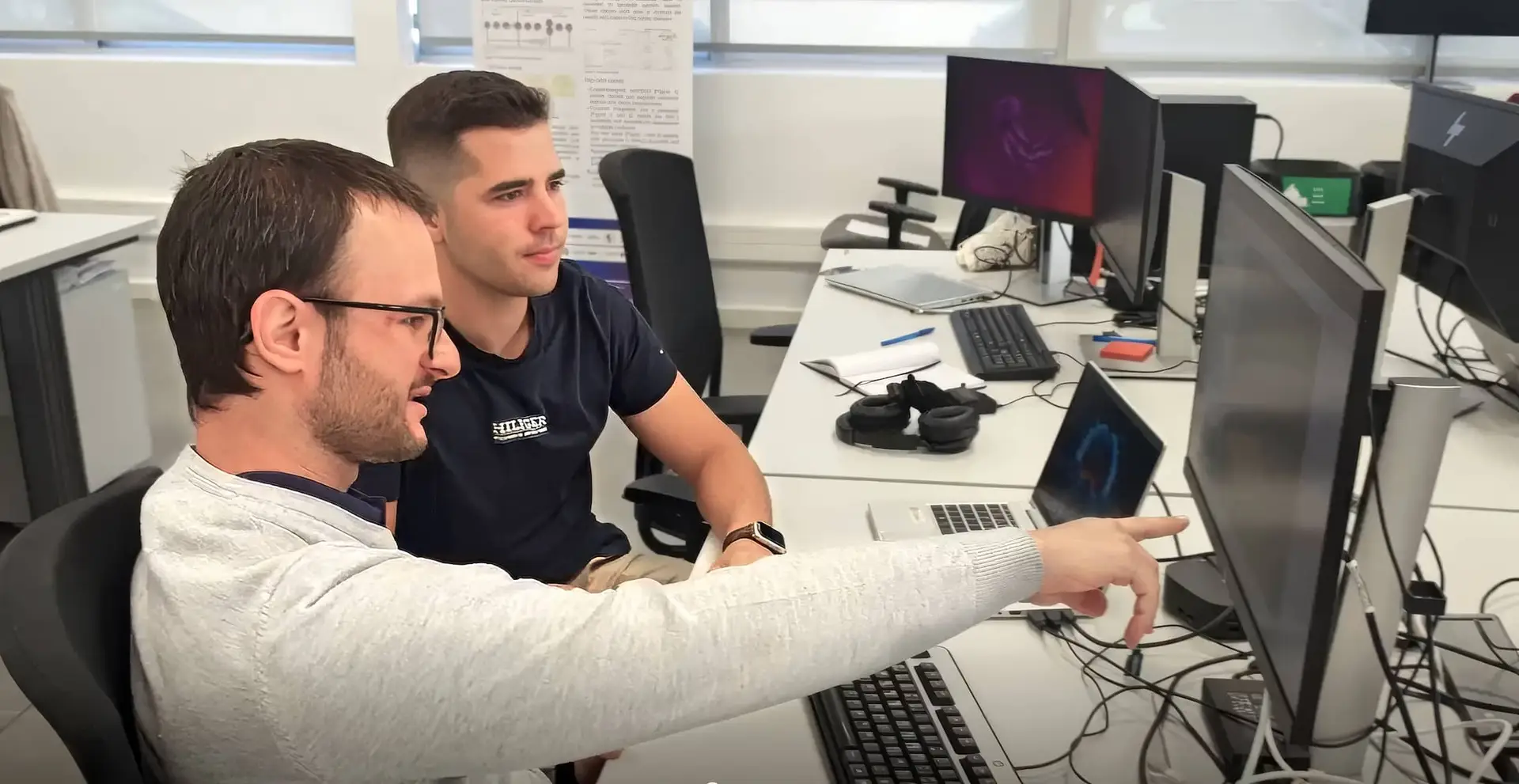
This is where Perez Quintana’s research becomes crucial. The goal of his project is to create a modular “ reference perception system .” In essence, it is an external measurement instrument: a set of high-precision sensors and algorithms that are temporarily installed in a vehicle to establish “field truth” during a test. The term “modular” means that it can be adapted, allowing sensors to be added or changed according to the needs of the test. This system is not intended to be commercialized in production vehicles, but to act as an objective and almost perfect observer during tests. “ The main challenge of a reference perception system is that it needs to be more accurate than the perception systems in commercial vehicles ,” Marc Perez explains.
To achieve this superior accuracy, the system attacks the problem in two ways: hardware and software . First, it uses higher-quality hardware (physical components) than is installed in commercial vehicles, where price is a limitation. These include 360º Lidars, which generate a complete 3D map of the environment using laser beams; the IMU (Inertial Measurement Unit), which records the acceleration and precise orientation of the vehicle itself; as well as cameras and radars. Second, it uses software (algorithms) with more computing power. This digital “brain” is responsible for “data fusion”: it combines the information from all the sensors to create a single coherent image of reality. The key is that it does not trust all the sensors equally. The system knows, for example, that Lidar is extremely accurate at measuring distances, while a camera may be better at identifying what the object is. In this way, the system “weights” or gives more credibility to the most reliable source for each specific data. “ When detections arrive […], we update the list of objects taking into account the accuracy of the information ,” says Pérez. The result is a reliable and updated real-time catalog of everything surrounding the vehicle (position, speed and acceleration).
"The main challenge of a reference perception system is that it needs to be more accurate than perception systems in commercial vehicles."
Marc Perez Quintana, Industrial Doctoral Student (Applus+ IDIADA / UPC) Share
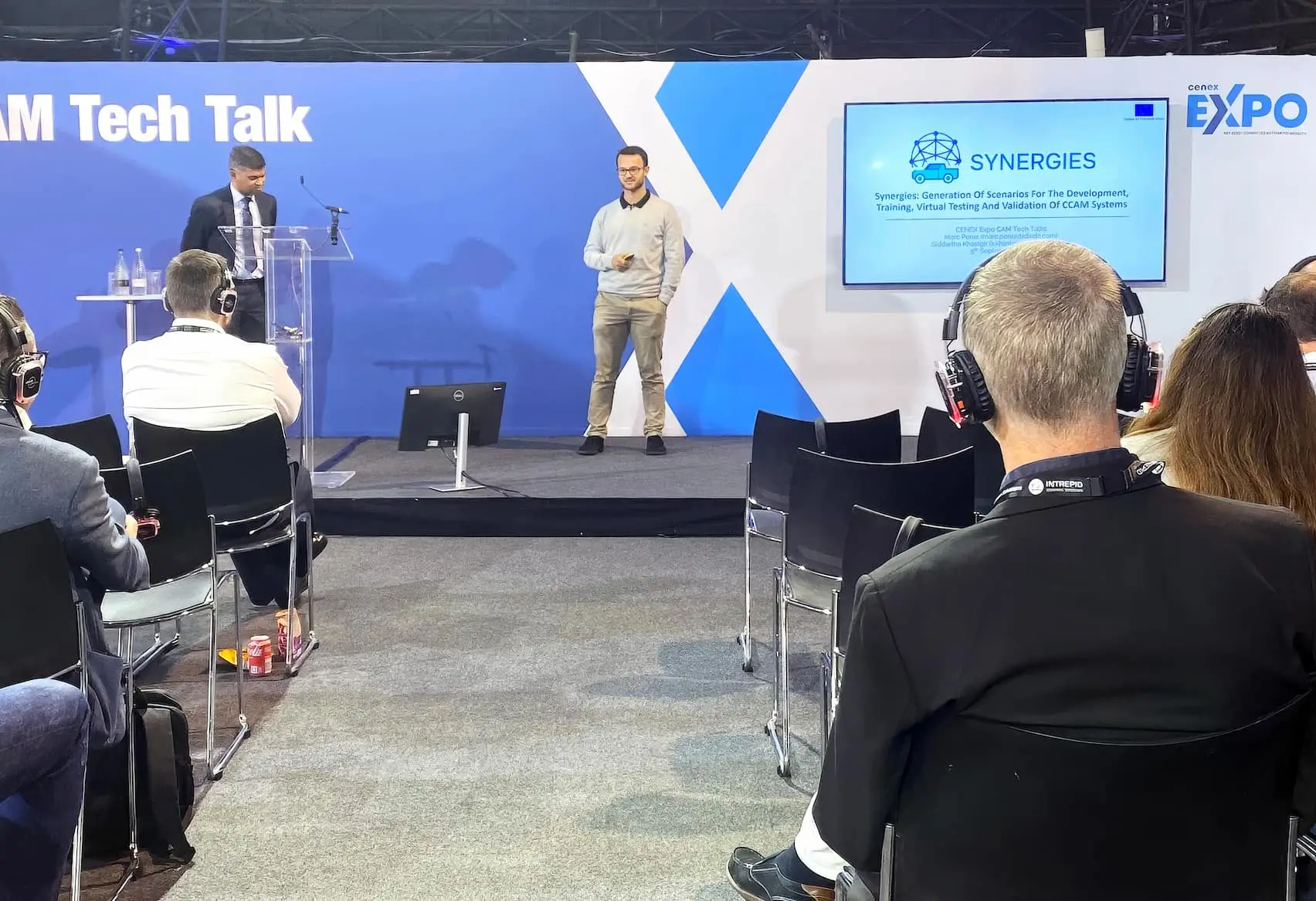
The development, supervised by Antonio Agudo (UPC) and Xavier Sellart (IDIADA), came across a key discovery. The team identified that simply combining data was not enough if the source data did not have the highest quality . “ Perhaps the most important moment was realizing that only by improving the combination of detections do we have a significant precision peak ,” reflects Antonio Agudo, director of the thesis. This revelation led the project to a new phase: improving the detections of the most precise sensor , the Lidar (which generates a 3D point cloud). Through a collaboration with the Technical University of Eindhoven (TU/e), the detection of objects in these point clouds was improved, making it easier for the model to differentiate between similar objects, such as trucks and buses.
The modularity of the system is another of its strengths. It is designed to work with different sensor configurations and can even integrate information from vehicle-to-vehicle communication (V2X). “ A good example of this was the demonstrator we made for the European project SAFE-UP, where a pedestrian communicated his position to vehicles (…) even though he was not visible to the vehicle sensors ,” explains Pérez.
The impact of this project is direct and strategic. Applus+ IDIADA is already a global benchmark in the validation of ADAS systems, acting as a Euro NCAP approved laboratory. However, safety protocols are changing rapidly to include open road testing. “ A sufficiently precise and robust reference perception system could mark a before and after ,” says Marc Pérez. According to the industrial doctoral student, the lack of a reliable validation system “ is the main problem that does not allow validation, and even homologation, to be extended further on the open road .”
The collaboration between the academic knowledge of IRI-UPC, which provides the servers for algorithmic training, and the industrial resources of IDIADA, which provides the prototypes and test tracks, has been fundamental. For the academic part, the thesis director Antonio Agudo highlighted the fundamental challenge of the project: “ the transfer of methods that work well in a controlled environment […] so that they also work in real applications in much more variable and unpredictable environments ”. This industrial doctoral project not only solves a complex technical challenge, but also provides the industry with the necessary tool to move towards more automated, safe and efficient mobility. “ This project will allow us to continue being global references when it becomes more important to validate these systems on the open road ”, concludes Pérez.